
How to Choose Machine Knives for Food Processing Equipment
Choosing machine knives for food processing equipment is rarely just a matter of finding the sharpest blade. In real production, the right knife has to work with the product, the machine, the cleaning routine and the replacement schedule. A blade that performs well on dry bakery products may not be the best choice for wet meat, seafood or vegetable processing. A knife that looks correct on paper can still cause tearing, product loss or repeated downtime if the edge angle, hardness or mounting details are not matched to the line.
At LIJIAN, we see this most often when buyers send an old sample or a drawing and ask for a direct replacement. The drawing is important, but it is only the starting point. To make a useful food processing blade, we also need to understand what the blade is cutting, how fast the machine runs, whether the environment is wet or corrosive, and how the knife is cleaned between shifts.
Start With The Product Being Cut
Different food products ask very different things from a blade. Meat and seafood processing usually needs a clean edge, corrosion resistance and stable performance after washing. Vegetable processing often needs a very sharp edge to reduce crushing and keep the cut surface clean. Frozen food and dense bakery products may require stronger edge support because the cutting load is higher.
This is why a general-purpose blade is not always the best choice. For a factory running high volumes, a small improvement in cut quality or service life can reduce product waste and maintenance stops. The blade should be selected around the actual food product, not only around the machine model.
Check Machine Fit Before Discussing Material
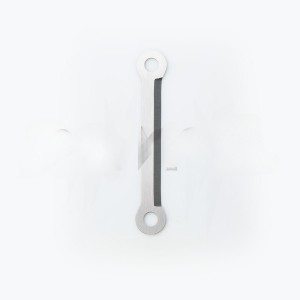
Machine fit comes first. The most common problems are not always caused by poor steel. Wrong hole position, slightly different slot width, uneven flatness or an incorrect profile can create vibration, poor cutting or unsafe installation. When replacing food processing blades, buyers should confirm the outside dimensions, thickness, hole pattern, mounting slots and cutting profile.
If a drawing is available, it should include tolerances and material notes. If there is no drawing, a used sample is often the most practical reference. LIJIAN can manufacture custom food machinery blades from drawings, samples or machine model references, but the more operating details we have, the better we can judge whether the original design should be copied exactly or slightly improved.
Material Selection Is A Balance, Not A Slogan
Many suppliers describe blades as ?high hardness? or ?high quality?, but hardness alone does not solve every problem. In wet food production, corrosion resistance and cleaning stability may be more important than maximum hardness. In abrasive products, wear resistance becomes more important. In high-impact cutting, a blade that is too hard may chip sooner than expected.
Common choices include stainless steel for food contact and wet environments, tool steel for stronger wear resistance, and coated or surface-treated options where sticking, friction or service life needs improvement. The right choice depends on the product, cutting speed, cleaning chemicals and expected replacement cycle.
Edge Geometry Changes The Result
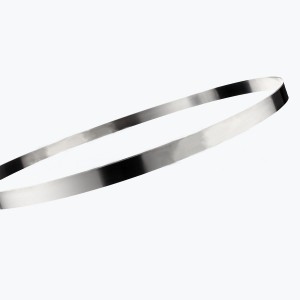
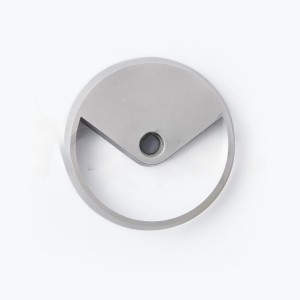
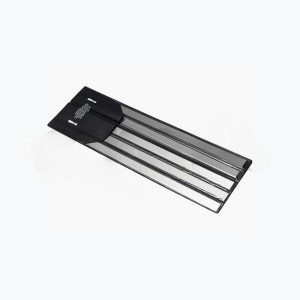
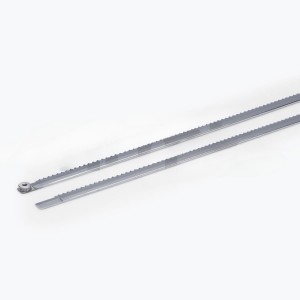
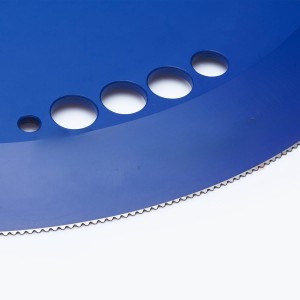
The edge design should match the cutting action. Straight edges are often used where a clean, direct cut is needed. Serrated or toothed edges may help with tougher skins, films or fibrous products. Circular knives and slitter blades are more suitable for continuous cutting or web-style material handling. Some food equipment uses special profiles that must follow the original machine design closely.
For buyers, it is useful to record the current problem before ordering replacement blades. Is the blade wearing too fast? Is the product tearing? Is there residue building up on the edge? Is the cut uneven after a few hours? These details help the manufacturer adjust the edge angle, finish or material route.
Cleaning And Food Contact Conditions Matter
Food processing blades often work in environments where cleaning, moisture and residue are part of daily operation. A blade used in seafood or meat processing must tolerate washing and possible salt exposure. A blade used in bakery or dry food may face different residue and wear problems. The surface finish should not be ignored, because rough surfaces can hold residue and make cleaning harder.
For this reason, we prefer to ask about the cleaning method before recommending a material. The blade is not an isolated part. It is part of the hygiene and maintenance routine of the whole line.
When Custom Blades Are Worth Considering
Custom blades are worth considering when the original blade is difficult to source, service life is unstable, the machine has been modified, or the factory wants a more repeatable supply. Custom does not always mean changing the design. Sometimes the best custom blade is a more consistent version of the original part, made with better control of flatness, holes and edge finish.
LIJIAN supports replacement and custom food processing blades for equipment such as slicers, dicers, portioning machines, seafood processing machines, meat processing lines and related packaging equipment. For many projects, the most useful information is a drawing or sample, the machine brand, the product being cut and the current pain point.
Useful Information To Send Before Quotation
- Blade drawing or clear photos of both sides
- Outside size, thickness, hole diameter and slot position
- Machine brand and model, if available
- Food product being cut and approximate line speed
- Current blade life and main failure problem
- Cleaning environment and whether the line is wet or dry
With this information, a blade supplier can give a more practical recommendation instead of only quoting a part by size.
FAQ
Can LIJIAN make food processing blades from a sample?
Yes. A used sample can be measured and used as the base for replacement production. If the sample is worn, it is better to also provide photos of the machine and explain the cutting problem.
Which material is best for food processing blades?
There is no single best material. Stainless steel is often preferred for food contact and wet environments, while tool steel or coated options may be selected for wear resistance or special cutting conditions.
How can I improve blade service life?
Service life depends on material, hardness, edge design, installation accuracy, product type and cleaning method. If blades fail early, the first step is to identify whether the issue is wear, chipping, corrosion or wrong fit.
Do custom blades require a large order?
Not always. Small-batch replacement can be discussed when drawings or samples are clear. The exact quantity depends on blade complexity and material availability.
For related product categories, see food processing blades (/food-processing-blades/), thermoforming machine knives (/thermoforming-machine-knives/) and packaging machine knives (/packaging-knives/).