
Why Packaging Machine Knives Cause Film Tearing: A Practical Troubleshooting Guide
Short Description:
Film tearing is often blamed on the packaging film, but that is only part of the story. In day-to-day packaging work, the knife, the anvil, the way the blade enters the material, and the condition of the machine all influence the cut. A replacement knife can look sharp on the bench and still create a poor cut once it reaches production speed.
This guide looks at the failure patterns we see most often with packaging machine knives: torn film, hanging strands, burrs, uneven cut edges and unexpectedly short blade life. The aim is not to make every problem sound like a material issue. It is to help a packaging team narrow down the real cause before ordering the next set of blades.
Start with the cut, not the catalogue number
When a line begins to tear film, the quickest response is usually to reorder the last blade. That is reasonable only when the blade has given stable results before. If the same failure returns soon after a replacement, the knife specification may be correct on paper but wrong for the actual line condition.
Before measuring a blade, look at the failed pack. Is the film tearing before the cut reaches the end? Is there a white stress mark close to the cut? Does the edge look pulled rather than cut? These details point to different causes. A clean but incomplete cut is not the same problem as a jagged edge with stretched film.
1. Film tears before the cut is complete
A film tear normally means the material is being stretched while the knife is trying to separate it. A dull edge is one cause, but it is not the only one. An incorrect bevel, too much side load, or an anvil that has worn unevenly can all turn a cutting action into a pulling action.
- Check the cutting angle: A blade designed for a thicker laminate can be too aggressive or too blunt for a thin barrier film.
- Check the anvil or counter knife: A low spot, a groove or adhesive build-up changes how the blade meets the film.
- Check blade alignment: If only one side of the pack tears, misalignment is more likely than a general loss of sharpness.
- Check tension and speed together: A setting that works at low speed can fail once tension rises during production.
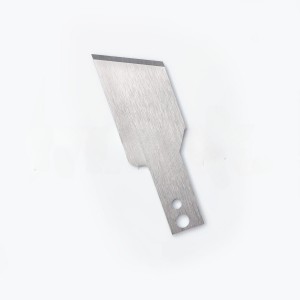
For flexible packaging and HFFS work, the edge geometry matters as much as the steel grade. A narrow, precise cutting edge can reduce the force needed to separate film, but it must be supported by adequate blade stiffness. That balance is why a drawing, a sample blade and line information are more useful than a product name alone.
2. Burrs, strings or a rough edge after cutting
Rough edges are commonly linked to a blade that is already worn, yet recurring burrs on new packaging machine blades deserve a closer check. In many cases, the problem is a mismatch between the tooth or serration pattern and the material stack.
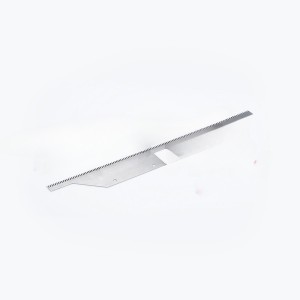
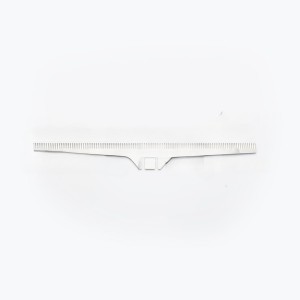
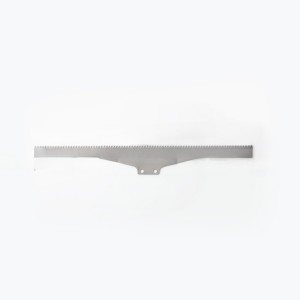
Serrated knives are useful where the film needs a positive bite, but the serration pitch, tooth depth and tooth finish cannot be copied blindly from a different machine. A pattern that cuts one film cleanly may leave strings on another, especially when the pack uses a multi-layer structure or adhesive coating.
| Visible symptom | Likely cause to check | Useful next action |
|---|---|---|
| Fine strings along the cut | Worn micro-serrations or unsuitable tooth pitch | Compare the old and new edge profile under magnification |
| One corner is ragged | Blade or anvil is not parallel | Check mounting surface, clamping and runout |
| Edge looks melted or dragged | Heat, adhesive build-up or excessive friction | Inspect cleaning interval and film contact points |
| Cut varies from pack to pack | Film tension or registration is unstable | Record line speed, tension and failure frequency before changing steel |
3. The replacement blade wears out too quickly
Short blade life is not solved by simply choosing the hardest material available. Very hard steel can resist abrasion well, but it may be less forgiving where the line has impact, vibration or an imperfect counter surface. The better question is: what is actually wearing the edge?
For clean, dry film cutting, edge geometry and surface finish may matter more than a major material change. For abrasive films, filled films or lines with frequent contact against a counter knife, a wear-resistant tool steel or a suitable coating may make sense. For food packaging equipment, the design also has to consider cleaning routines, corrosion exposure and the ability to repeat the specification across batches.
When we assess a worn packaging knife, we look for the wear pattern. Uniform edge rounding suggests normal abrasion. Chipped sections indicate shock, hard contamination or misalignment. Polished areas on one side of the blade often point to rubbing rather than cutting. The wear pattern is practical evidence; it should guide the replacement design.
4. When the knife is not the only part that needs attention
Many blade problems begin outside the blade. A worn holder can allow micro-movement. A dirty clamp can introduce a slight angle. A damaged anvil can shorten the life of every replacement knife fitted to the line. Replacing only the cutting edge without checking these parts can create an expensive cycle of repeat orders and repeat failures.
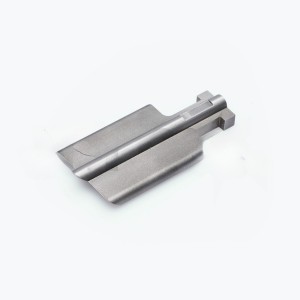
For tray sealing and thermoforming equipment, the relationship between the knife and the forming or sealing tool is particularly important. If your line is cutting formed trays or sealing film, review the mating parts together with the knife. Our pages for tray sealing knives and thermoforming machine knives show the types of replacement components commonly used on these systems.
Information that makes a replacement knife more accurate
A supplier can usually work from a part number, but a part number rarely explains the failure you are trying to eliminate. For custom or replacement packaging knives, the following information helps produce a more useful recommendation:
- Clear photos of the used blade, especially the worn edge and mounting holes
- Overall length, width, thickness, hole positions and any tooth or serration detail
- Machine make and model, plus whether the operation is film cutting, bag making, tray sealing or thermoforming
- Film type and any change in material, thickness, coating or cleaning chemicals
- A short description of the defect and when it appears during the run
With that information, it becomes possible to check whether the blade should match the original specification exactly or whether the edge geometry, material or surface treatment should be adjusted. For most lines, the best replacement is not the most complicated blade. It is the blade that cuts consistently, fits correctly and can be repeated without surprises.
Frequently asked questions
Can a sharper blade always solve film tearing?
No. A sharper edge may reduce cutting force, but tearing can also come from poor alignment, damaged counter surfaces, unstable tension or unsuitable serration. Replacing the blade without checking these factors can hide the real problem for only a short time.
Should packaging machine knives be made from the hardest steel?
Not always. Material selection should match the film, cutting method, wear mechanism and machine condition. A balanced specification is usually more reliable than selecting hardness alone.
What should be sent for a custom replacement packaging blade?
A drawing is useful, but a physical sample and photos of the used edge are often better. Include machine details, the material being cut and the specific line problem so the replacement can be reviewed as a working component rather than a loose spare part.
LIJIAN manufactures replacement and custom blades for packaging, food processing and material converting equipment. For a replacement review, send the blade drawing or sample together with the operating details described above.