How To Specify Replacement Knives For Food Packaging Equipment
Buying replacement knives for food packaging equipment looks simple from the outside. Send a drawing, match the size, choose a steel grade, wait for delivery. In real production, that is often not enough. A packaging knife has to work with film tension, sealing pressure, tray format, machine speed and the holder condition. If one of those details is ignored, the blade may fit the machine but still fail on the line.
This is why LIJIAN usually treats a replacement knife inquiry as a small production diagnosis. The question is not only “Can we make this shape?” It is “What does this knife need to cut, at what speed, and what problem are we trying to avoid?” That thinking is especially important for thermoforming machines, tray sealing machines, vacuum packaging lines and sleeve film equipment.
Start With The Machine Position
The first useful detail is the machine position. A knife used for film trimming is not the same as a knife used for tray edge cutting or punch work. Even inside one packaging machine, there may be several blade positions with different cutting action. Some knives cut against a counter blade, some cut against a soft support, and some work as punch-and-die sets.
For branded equipment such as MULTIVAC, VC999, Tiromat, CFS, GEA or similar machines, the model name helps, but it should not be the only reference. Many factories modify tooling or run different pack sizes on the same machine. A clear photo of the installed knife and holder can often prevent a wrong assumption.
Film Type Changes The Blade Choice
Packaging film is not one material. Rigid thermoforming film, soft top film, laminated pouch film, shrink sleeve film and vacuum bag material all behave differently. A very sharp edge may cut one film well but drag another. A serrated edge may solve a slip problem but leave an edge finish that is not acceptable for another pack.
Before confirming a packaging knife, we like to know the film structure, approximate thickness and whether the current problem is tearing, incomplete cutting, dust, burrs or fast dulling. These details guide the bevel angle, hardness and surface finish more than a general material name does.
What To Send Before Ordering
- Machine brand and model, if available
- Blade drawing, old sample or clear photos with dimensions
- Outside size, thickness, mounting hole positions and slots
- Film type, tray size or packaging format
- Current cutting problem, if there is one
- Expected quantity and whether it is a trial or repeat order
For custom packaging blades, a used sample is often better than a rough drawing. The sample shows bevel direction, wear mark and sometimes the reason the old blade failed. If the current blade is not performing well, copying it exactly may only repeat the same issue. In that case, we prefer to review the cutting result before producing the new batch.
Common Mistakes We See
One common mistake is choosing the hardest material without considering chipping risk. Another is asking for a sharper edge while the real problem is poor support or wrong bevel direction. A third mistake is ignoring cleaning conditions. Food packaging knives may face moisture and chemicals, so corrosion resistance and surface finish can matter as much as edge life.
For packaging lines, downtime is usually more expensive than the knife itself. A practical replacement knife should be easy to install, stable during production and consistent from batch to batch. That is why LIJIAN keeps confirmed specifications for repeat orders and asks for working details when the blade is new to us.
Related LIJIAN Knife Options
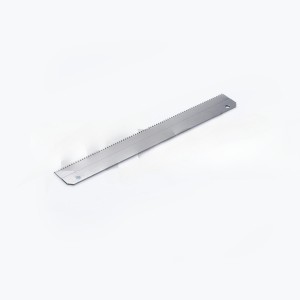
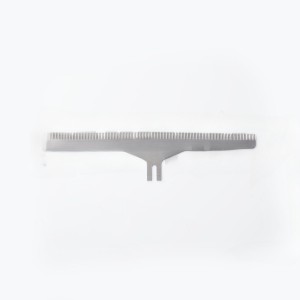
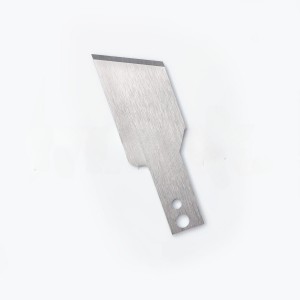
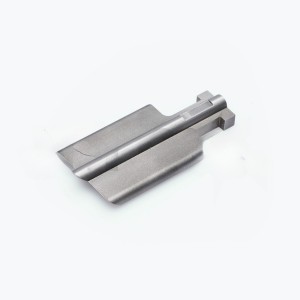
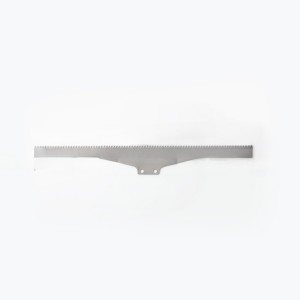
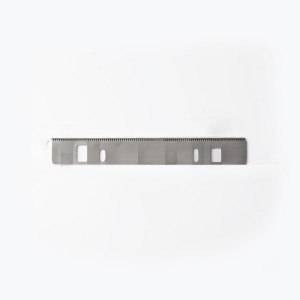
For packaging applications, LIJIAN supplies packaging machine knives, thermoforming machine knives, tray sealing knives, MULTIVAC compatible knives, VC999 compatible knives and other custom cutting parts made from drawings or samples.
The best result usually comes from a simple but complete conversation: what machine, what material, what knife position, and what problem needs to be solved. With those details clear, the replacement knife becomes much more predictable.